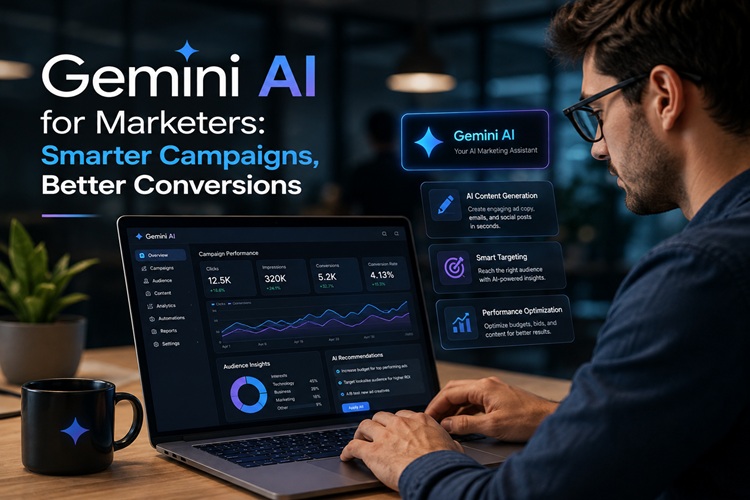
In today’s fast-moving digital landscape, marketers face constant pressure to create relevant content, reach the right audiences, and turn attention into measurable results. Google’s Gemini AI has emerged as a powerful partner in this effort. Built as a multimodal model that understands text, images, video, and more, Gemini AI helps teams move from idea to execution faster while staying grounded in real data and brand context. This article explores how marketers can use Gemini AI to build smarter campaigns, improve conversions, and strengthen their overall online presence.
What Is Gemini AI and Why It Matters for Marketing
Gemini AI is Google’s family of advanced AI models designed to reason across different types of information and generate useful outputs. Unlike earlier tools that mainly produced text, Gemini handles multimodal inputs and supports long-context understanding. Marketers can feed it product details, brand guidelines, audience insights, campaign briefs, and performance data, then receive structured suggestions, copy variations, creative concepts, and analysis.
Recent updates have expanded its reach inside Google’s advertising and productivity tools. Features such as Gemini-powered creative generation in Asset Studio, integration with Google Marketing Platform, and tools for drafting ad messaging make it practical for everyday campaign work. The result is an AI system that does more than answer questions—it helps plan, produce, optimize, and measure marketing activities.
How Gemini AI Powers Smarter Campaign Planning
Strong campaigns begin with clear insight. Gemini AI accelerates the research and briefing stage in several practical ways.
Audience and Intent Mapping
Traditional keyword lists often miss how people actually search and ask questions. Gemini can analyze search patterns, long-tail queries, and conversational prompts that appear in AI-powered search experiences. Marketers can prompt it to surface pain points, buying triggers, and content gaps for specific segments. This produces briefs that better match real user intent rather than outdated assumptions.
Competitive and Market Research
With deep research capabilities, Gemini can review competitor messaging, recent industry coverage, and public data, then summarize findings into actionable reports. Teams can ask it to compare positioning, identify underserved angles, or outline opportunities for differentiation. Because it works with large context windows, it can process multiple documents, website pages, and notes in one session.
Campaign Brief Generation
Once research is complete, Gemini helps turn insights into structured briefs. Marketers can request creative angles, messaging frameworks, channel recommendations, and success metrics. The output serves as a starting point that humans refine, ensuring strategy stays human-led while production moves faster.
Creating High-Performing Creative with Gemini AI
Creative development is often the bottleneck in campaign timelines. Gemini AI shortens that cycle without sacrificing brand consistency.
Ad Copy and Messaging Variations
Gemini can generate multiple headlines, descriptions, and body copy tailored to different audiences, tones, and platforms. For example, a team launching a product can request several creative angles focused on specific pain points, each with supporting headlines and short paragraphs. This supports rapid testing in Performance Max, Demand Gen, and Search campaigns.
Multimodal Asset Production
Newer capabilities allow Gemini to work with images and video. In Google Ads Asset Studio, models such as Gemini Omni help turn briefs, brand guidelines, and existing assets into video storyboards and finished creatives in horizontal and vertical formats. Marketers can refine scenes through natural-language instructions rather than starting over. This reduces the need for separate production pipelines for YouTube, Display, and social placements.
On-Brand Content at Scale
When connected to brand guidelines, product catalogs, or first-party data, Gemini produces assets that stay consistent with voice and visual identity. Some workflows even let teams generate social posts, email sequences, landing-page sections, and product descriptions from a single brief, then edit the results for final polish.
These tools do not replace creative directors or designers. They free teams from repetitive production so they can focus on strategy, storytelling, and experimentation.
Read More Story: New Apple Messages Plugin Lets ChatGPT Send Texts for You
Optimization, Measurement, and Conversion Improvement
Smarter campaigns also require continuous improvement. Gemini AI supports optimization in several areas.
Performance Analysis and Insights
Teams can upload or connect campaign data and ask Gemini to identify trends, underperforming segments, or creative patterns linked to higher conversion rates. It can summarize reports, suggest hypotheses for testing, and help prioritize next steps. In some enterprise setups, agents built on Gemini pull data from multiple sources and deliver ready-to-use insights.
Dynamic and Personalized Experiences
Gemini-powered formats in Google’s advertising ecosystem include conversational and shopping experiences that respond to user questions in real time. Ads can surface relevant product explanations or lead conversations based on live signals. When marketers supply strong product feeds and assets, these formats help match intent more precisely and can improve conversion quality.
Testing and Iteration Speed
Because generating new copy and creative variations is fast, marketers can run more A/B and multivariate tests. Gemini can also help interpret results and recommend the next set of experiments. Over time, this creates a tighter feedback loop between creative, media, and measurement.
Strengthening Online Presence with Gemini AI
Beyond paid campaigns, Gemini AI helps brands build a stronger, more discoverable online presence.
SEO and Content Strategy
Gemini assists with keyword clustering, content outlines, meta elements, and topic coverage. It can review existing site content for gaps, suggest internal linking opportunities, and draft sections that answer common questions clearly. Content structured with direct answers, clear headings, and factual support tends to perform better in both traditional search and AI-generated overviews.
Consistent Multi-Channel Messaging
From blog posts and email sequences to social captions and video scripts, Gemini helps maintain a coherent brand voice across channels. Marketers can adapt the same core message for different formats and audiences quickly, which strengthens recognition and trust.
Educational and Thought-Leadership Content
The same research and summarization strengths that support student study tools—such as generating interactive explanations, quizzes, or structured reports—can be adapted for marketing. Brands can create helpful guides, explainers, and interactive assets that attract organic traffic and position the company as a useful resource. Google’s expansion of Gemini features for learning and research illustrates how the technology turns complex information into accessible formats that engage audiences.
Efficiency for Smaller Teams
For businesses without large creative or analytics departments, Gemini lowers the barrier to professional-grade output. Experimental tools that build brand profiles from a website and generate campaign ideas further democratize access to sophisticated marketing support.
Practical Tips for Getting Started with Gemini AI
To capture value while avoiding common pitfalls, marketers should follow a few grounded practices:
– Start with clear goals and high-quality inputs. Provide brand guidelines, accurate product details, and specific audience descriptions.
– Treat outputs as drafts. Always review for accuracy, brand fit, legal compliance, and human insight.
– Combine Gemini with first-party data and measurement platforms for better relevance and attribution.
– Test systematically. Use the speed of generation to increase the volume of experiments rather than simply producing more of the same.
– Stay updated on integrations inside Google Ads, Marketing Platform, and Workspace, as new capabilities continue to appear.
Looking Ahead: The Gemini Advantage for Marketers
Gemini AI is not a magic solution that eliminates the need for strategy or creativity. Its real strength lies in compressing the time between insight and action. Marketers who use it well can plan more informed campaigns, produce higher volumes of relevant creative, optimize faster, and maintain a more consistent online presence across search, social, email, and advertising channels.
As Google continues to embed Gemini deeper into its advertising and productivity products, the teams that learn to collaborate effectively with the technology will gain an edge in both efficiency and performance. Smarter campaigns and better conversions become more achievable when AI handles the heavy lifting of research, drafting, and analysis—leaving people free to make the judgment calls that ultimately drive brand growth.
By focusing on clear strategy, strong data, and thoughtful human oversight, marketers can turn Gemini AI into a reliable partner for building campaigns that connect and convert.